
Author: mahoar

  • How I’m Building My Emergency Fund Before Investing More

    How I’m Building My Emergency Fund Before Investing More

    I’m currently building my emergency fund before investing more, because I want a stronger financial foundation before taking bigger risks with my money. Investing is still important to me, but I’m learning that having a safety net first can make the whole journey feel calmer and more sustainable.

    Why I’m Pausing Before Investing More

    I want to invest more and move faster toward financial freedom, but I’m learning that investing without a safety net can create unnecessary stress.

    I’m focusing more on building an emergency fund right now, so if something goes wrong, I have something to rely on.

    What an Emergency Fund Actually Is

    An emergency fund is money set aside for unexpected expenses, like car repairs, medical bills, job loss, or anything that could otherwise push you into debt.

    It’s a way to stay in control and feel safe. Even in the midst of a storm.

    Why I Think It Matters Before Investing More

    If you just start immediately investing and ignoring your emergency fund, you can end up in unnecessary stress. For example your investment might have gone temporarily down, and then an emergency comes and you have to sell everything with a loss.

    But if you had an emergency fund, you could have waited with selling your investment until it had risen again so you could earn profit instead of losing.

    Sometimes it can also be hard to access your money if you have invested it. For example, in a fund, it usually takes between 2-6 business days until you receive the money.

    And that’s not practical if you have an emergency that needs to be fixed today.

    My Current Emergency Fund Goal

    My first goal is not to build a perfect emergency fund overnight. My first goal is to create a small safety net that makes me feel more stable.

    I have split my current emergency fund goal in 3 parts:

    Level 1: A small starter emergency fund:

    • 10 000 NOK

    Level 2: One month of expenses

    • 20 000 NOK

    Level 3: Three to six months of expenses

    • 100 000 NOK

    This is where I want to be, especially before i start investing more aggressively.

    How I’m Finding Money to Build It

    Right now, what i do, is to make saving automatic. If you start small, and make it automatic, it’s much easier to stick to.

    I have a setting in my bank for my debit card, which is that every time i use my card, 10% of the money i spend goes to another account, and from that account 450 NOK is spent investing in a chosen fund.

    For example, if I buy groceries for 250 NOK, 25 NOK is sent from my debit card, to the separate account.

    This way, I’m building my emergency fund, and i invest a small part every month to a fund at the same time. And the best part is that it happens without me noticing it happen.

    Where I’m Keeping My Emergency Fund

    I’m keeping my emergency fund in a separate account from the account I use in everyday life.

    I want my emergency fund to be accessible, but not so accessible that I accidentally spend it.

    I recommend to have it in a separate account that has high interest-rate, in that way you also earn a bit from the interests over time.

    What Counts as a Real Emergency?

    Don’t mix emergency with ”something I really want”.

    It’s important to be disciplined when it comes to the emergency fund. Otherwise you will just use it unnecessarily, and the fund will never grow to be a real source of protection and safety.

    Examples on emergencies:

    • Urgent car repair
    • Job loss
    • Medical or family emergency
    • Essential home repair

    Examples on things that are not an emergency:

    • New phone upgrade
    • Random shopping
    • Vacation
    • Investing opportunity

    How This Helps Me Stay Calm With Investing

    With an emergency fund, I believe I’ll be able to invest with more patience. If the market goes down or life gets expensive, I won’t feel forced to sell.

    It actually helps you with your investing, because if you have an emergency fund, you can take more risk. Taking more risk can potentially lead to higher returns, but I want to make sure I have a safety net first.

    My Simple Plan Going Forward

    My plan is simple: build my emergency fund step by step, keep it separate, and only invest more aggressively once I feel financially stable enough.

    I’m investing slowly right now with very little risk, at the same time as I’m building my emergency fund. When my fund is big enough i will start investing more heavily and more risky.

    Conclusion: Safety First, Then Growth

    I still want to invest and grow my money, but I’m realizing that financial freedom is not only about chasing returns. It’s also about building peace of mind.

    If you’re also trying to save more money, you might like my post about how to start saving money when you’re broke.

    I also wrote about beginner investing and what I’m learning before I start, which connects well with why I’m building a safety net first.

    You can also read more about my journey to financial freedom and why I started this blog in the first place.

    Vanguard also explains that an emergency fund can help you handle unexpected expenses without relying on debt or selling investments at the wrong time.

    What about you? Are you building an emergency fund, investing already, or trying to do both at the same time? Let me know in the comments — I’d love to hear where you are in your journey.
  • Beginner Investing: What I’m Learning Before I Start

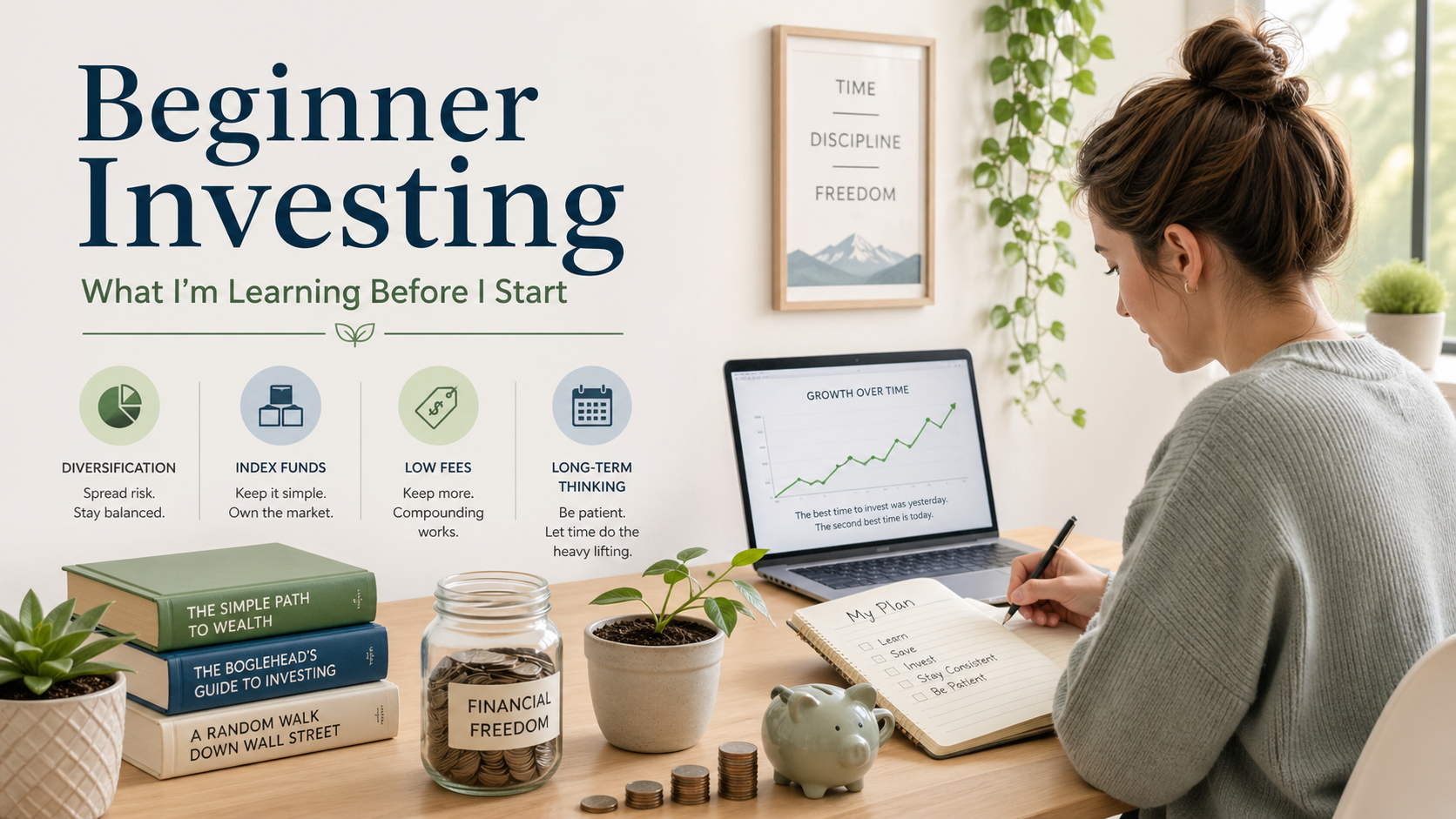
    Beginner Investing: What I’m Learning Before I Start

    Why I’m writing about investing

    I think investing is a big part of becoming financially free.

    I’m still early in the process, and investing feels both interesting and a little complicated. There is a lot to learn, and it can be easy to feel like you need to understand everything before you begin.

    Right now, I’m investing a small amount every month. Not because I expect to get rich quickly, but because I want to build the habit, learn by doing, and slowly create something over time.

    For me, investing is not about chasing quick money. It is about building long-term freedom.

    Why investing matters for financial freedom

    Saving money is important, but saving alone may not always be enough to reach financial freedom — or it may take a very long time.

    A savings account gives stability and easy access to money, which is important. But the interest on a savings account is often lower than the potential long-term return from investments like funds, property, or even a good business opportunity.

    Of course, higher potential returns usually come with higher risk. That is why I think it is important to understand the basics before investing too much.

    For me, the simple idea is this:

    Saving gives me more control in the short term.
    Investing can help me build more wealth in the long term.

    What I used to think about investing

    I have always liked the idea of investing, but for a long time I thought I needed a lot of money before I could start.

    I also didn’t really have much money saved to invest with. That made me realize something important: saving is the foundation.

    Before I can invest seriously, I need control over my money. I need money for bills, daily life, unexpected expenses, and short-term goals.

    But I’m also learning that I don’t need to wait until everything is perfect. I can start small while I continue saving. Even a small monthly investment can help me build the habit and learn more about how investing works.

    That combination — saving and investing — feels powerful to me.

    What I’m learning now

    Investing is long-term:

    I’m trying to forget the idea of getting rich quickly. That mindset can easily lead to bad decisions. Instead, I want to think about investing as something slow, steady, and long-term. The goal is to build something lasting and worthwhile.

    Risk is normal, but it can be managed:

    Risk is part of investing. Investments can go up and down in value, and there is always a chance that I will not get the return I hoped for.

    But risk can be managed.

    One way to reduce risk is diversification, which means spreading money across many different investments instead of putting everything in one place.

    Another important rule is to only invest money I do not need soon.

    Index funds seem beginner-friendly

    Right now, I’m investing in a fund, and index funds are one of the things I’m trying to understand better.

    To me, index funds seem beginner-friendly because they are simple, diversified, and often have lower fees than many actively managed funds.

    They are usually less risky than buying only one or two single stocks, because the money is spread across many companies. But that does not mean they are risk-free. They can still fall in value, especially in the short term.

    Time matters more than perfection

    I’m learning that I do not need to know everything before I start.

    Of course, I should understand the basics. But if I wait until I feel like an expert, I might never begin.

    Starting small gives me a way to learn without taking too much risk.

    What I want to understand before I invest

    I don’t think I need perfect knowledge before investing, but I do think some basic understanding is important.

    These are some of the things I want to understand better.

    What is a fund?

    A fund is a collection of many investments, such as stocks or bonds, gathered into one product.

    When I invest in a fund through my bank, my money is spread across many companies or assets instead of just one. This can help reduce risk.

    In simple terms: buying a fund is like buying a small piece of a large investment basket.

    What does risk actually mean?

    In investing, risk means the chance that an investment can go down in value or not give the return I hoped for.

    For example, if I invest 1,000 kr in a fund, it might grow over time — but it could also fall in value for a while.

    Higher risk usually means bigger ups and downs, but also a higher chance of better returns over the long term. Lower risk usually means smaller ups and downs, but often lower returns.

    How do fees work?

    Fees are the costs I pay to invest.

    For funds, the most common fee is a yearly percentage fee, often called a management fee or expense ratio.

    For example, if I invest 1,000 kr in a fund with a 1% yearly fee, I pay about 10 kr per year.

    That may not sound like much, but fees matter over time. A small difference in fees can become a big difference after many years.

    In simple terms: lower fees usually mean more of my money stays invested for me.

    What does diversification mean?

    Diversification means spreading money across many different investments instead of putting everything in one place.

    For example, instead of investing in only one company, I can invest in many companies, industries, or countries.

    In simple terms: don’t put all your eggs in one basket.

    Diversification does not remove all risk, but it can reduce the risk that one bad investment hurts the whole portfolio.

    How much can I afford to invest?

    Before investing more, I need to look at my income, expenses, and financial situation.

    Before investing, I want to make sure I have:

    • Money for bills and daily life
    • An emergency fund for unexpected costs
    • No high-interest debt that should be paid down first
    • Money set aside for short-term goals

    After that, I can invest money I do not need soon — ideally money I can leave invested for several years.

    In simple terms: I should invest what is left after my needs, safety buffer, and short-term goals are covered.

    How can I stay calm when the market goes down?

    Markets go up and down. That is normal.

    When the market falls, I want to remind myself of the long-term plan instead of reacting emotionally to daily changes.

    If I invest in diversified funds and do not need the money soon, short-term drops are usually part of the journey.

    In simple terms: I do not want to panic-sell just because the market is temporarily down. Panic-selling can turn a temporary drop into a real loss.

    My current investing plan

    Right now, I’m putting 10% of what I spend with my card into a savings account. From that account, 450 kr is automatically invested into a fund every month.

    This means I’m both saving and investing at the same time.

    I like this system because it feels simple. I’m building an emergency fund while also creating the habit of investing every month.

    The amount is not huge, but that is okay. The goal right now is to learn, stay consistent, and slowly build momentum.

    Mistakes I want to avoid

    Investing money I need soon

    I do not want to put all my money into investment funds and ignore my savings.

    If something unexpected happens, I need money I can access quickly. That is why I want to keep building my savings while investing small amounts on the side.

    Copying random advice from social media

    There is a lot of financial advice online, but not all of it is good.

    Some people make investing sound easy because they want attention, views, or sales. I want to be careful with advice that promises quick results.

    I use tools like ChatGPT to learn and understand concepts, but I still want to think critically and check information from reliable sources.

    Buying something just because it is hyped

    I do not want to invest in something just because a lot of people on TikTok, YouTube, or social media are talking about it.

    If I invest in something, I want to understand why.

    Doing my own research is part of the learning process.

    Panic-selling when prices fall

    Panic-selling is something I really want to avoid.

    If I sell when prices are low, I lock in the loss. But if I stay invested, the market may recover over time.

    Of course, there are situations where selling can make sense, but I do not want fear to be the reason I sell.

    Thinking investing will fix bad money habits overnight

    Investing is not magic.

    If I have bad money habits, investing alone will not fix everything. I still need to save, budget, avoid unnecessary debt, and make better daily decisions.

    Good habits take time. I want to be patient with myself and focus on progress, not perfection.

    What This Means for My Financial Freedom Journey

    Saving gives me control and a feeling of stability. It helps reduce stress and worry in my life.

    Investing gives me hope for the long term. It reminds me that small actions today can grow into something bigger over time.

    If I can also build multiple sources of income, that could help me reach financial freedom faster.

    But the foundation is still the same: financial knowledge, better habits, patience, and consistency.

    Conclusion: Learning before rushing

    I’m still at the beginning, and that is okay.

    My goal is not to pretend I know everything. My goal is to learn, take small steps, and document the journey honestly.

    If you are also new to investing, I hope this blog can be a place where we learn step by step together.

    New to Freedom With Markus?

    Start with my Start Here page for a simple roadmap to saving money, beginner-friendly investing, and building extra income over time.

    And before investing, I believe it is important to build a strong money foundation. That is why I recommend reading How to Start Saving Money When You’re Broke.

    This blog is part of my personal journey toward financial freedom. You can also read more about why I started it on my About Me page.

    What about you?
    What is one small financial habit you’re trying to improve right now? Let me know in the comments!

  • How to Start Saving Money When You’re Broke

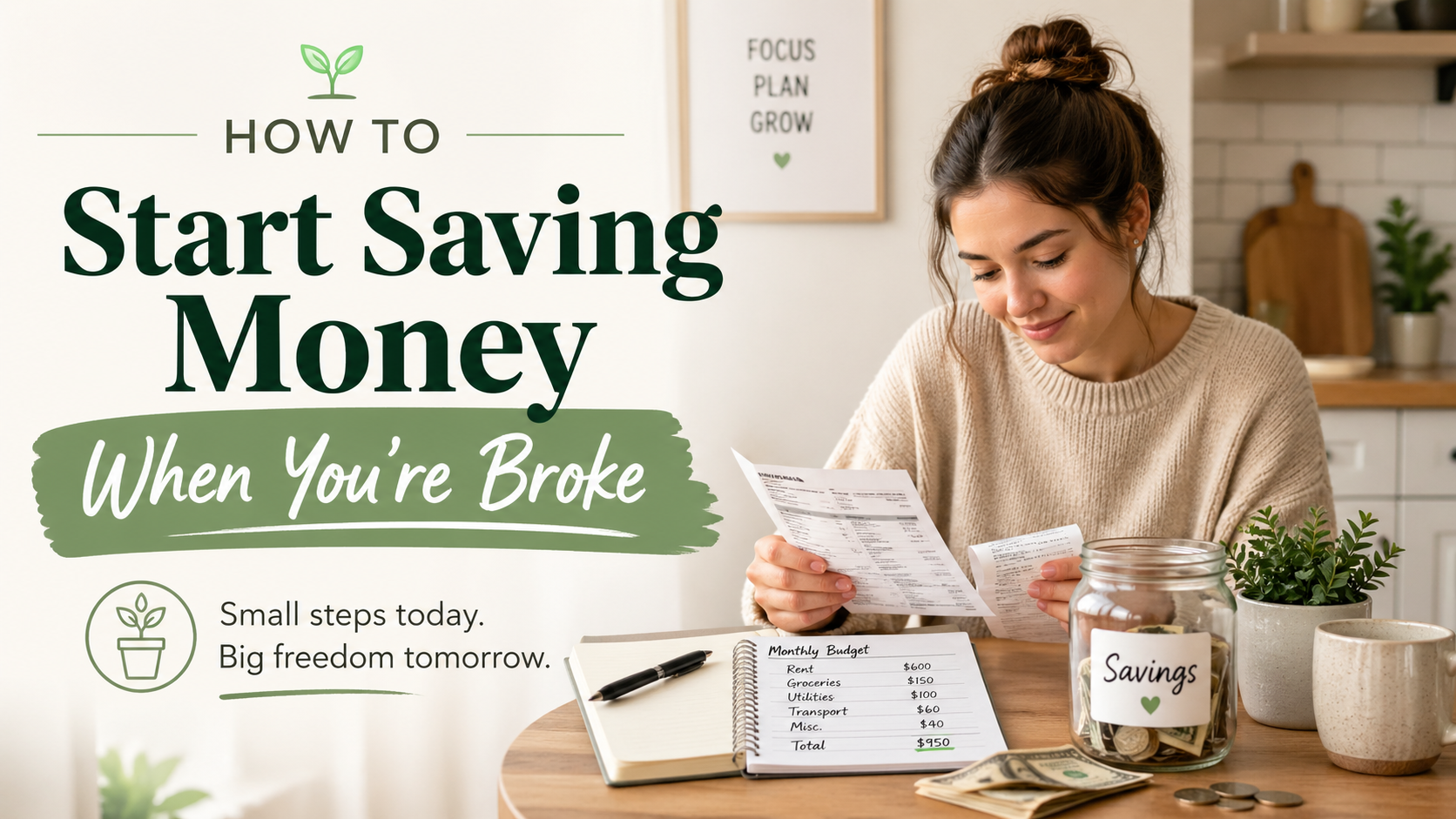
    How to Start Saving Money When You’re Broke

    When you’re broke, saving money can feel almost pointless. If there’s barely anything left at the end of the month, the idea of putting money aside can feel unrealistic.

    But I’m starting to realize that waiting until life feels easier is probably part of the problem.

    Why saving feels hard when you’re broke

    When you have almost nothing left at the end of the month, it’s easy to think that saving is pointless.

    That is a trap I’ve fallen into many times.

    If you’re already stressed about bills, debt, or unexpected expenses, saving money can feel like something you’ll “do later” when life is more stable.

    But for many people, that later never really comes unless they decide to start small anyway.

    Start small

    Example: Start with $5 or $10

    If saving feels impossible, start with an amount so small that it almost feels too easy. Maybe that is $5, $10, or $20 per month. The amount is not the most important part in the beginning. The most important part is proving to yourself that you can start.

    The point of saving when you’re broke is not to build a huge savings account in the first few months. The point is to build the habit.

    It’s about creating a little more stability and security every month, even if the amount is small.

    In the beginning, the amount may feel insignificant. But small amounts add up over time, and more importantly, they change how you think and behave with money.

    Know where your money is going

    A lot of people focus only on increasing the flow of money while ignoring the holes that leak it.

    I’ve had that mindset for years, and it’s something I’m now trying to change.

    It doesn’t matter how much money you make if it keeps disappearing through debt, unexpected expenses, subscriptions you forgot about, takeaway food, small daily purchases, and other leaks.

    Tracking your spending is important because it makes you more conscious of where your money actually goes.

    Cut one or two things first

    You don’t need to cut every unnecessary expense immediately.

    In fact, it’s probably better to start with one or two things first.

    The goal is not to remove all enjoyment from life. The goal is to gain more control and put more money toward what actually matters to you.

    Give saving a purpose

    It also helps to know why you’re saving.

    You’re not just saving to see more money sitting in your bank account. You’re saving to create safety, reduce stress, and avoid having to rely on debt when life happens.

    Saving can also give you opportunities. If a real opportunity shows up and you have nothing set aside, you may not be able to take it.

    Focus on stability, not perfection

    This is not about becoming financially free overnight.

    It’s about creating a little more control, and even a small buffer can change how life feels.

    The best day to start was yesterday; the next best time is now.

    Start now, even if it’s just a small amount. Over time, it can make a huge difference in your peace of mind and quality of life.

    Conclusion

    I’m still early in this process, but I’m starting to see that saving money is not just about numbers.

    It’s about creating a little more safety, a little more peace of mind, and a little more control.

    And when you feel broke, that can be a powerful place to start.

    Action step:
    This week, choose one small amount you can save and one expense you can reduce. It does not have to be perfect. It just has to be a start.

    If you want to read more about what made me take saving money more seriously, you can read this next:
    My Biggest Financial Mistake So Far

    New to Freedom With Markus?

    Start with a simple roadmap for saving money, learning investing, and building extra income over time.

    What about you?
    What is one small financial habit you’re trying to improve right now? Let me know in the comments!

  • My Biggest Financial Mistake So Far: Not Saving Money

    My Biggest Financial Mistake So Far: Not Saving Money

    I’m not writing this as an expert.

    I’m writing this as someone who has made mistakes, ignored things I should have dealt with earlier, and is now trying to turn things around.

    The Biggest Financial Mistake I’ve Made So Far

    If I had to point to the biggest financial mistake I’ve made so far, it would be this: not saving money.

    For a long time, I thought saving money was boring and unnecessary. I kept telling myself that I should focus on earning more, not saving more.

    I didn’t save because I didn’t see the point.

    That mindset cost me a lot of stress, discomfort, and avoidable problems.

    One example goes back to when I was around 17 or 18 years old. I attended a free seminar about getting rich with JT Foxx, a self-promotional business coach.

    I was there with some of my coworkers from a sales job, and by the end of the seminar, I was completely hooked. He offered a more in-depth seminar, a personal business meeting with him, and some other resources. Altogether, it cost around 12,000 NOK.

    I wanted it badly. I could already picture the opportunities and the money it might lead to.

    There was just one problem:

    I didn’t have the money.

    Fortunately—or unfortunately—my boss offered to pay for it, and let me pay him back later.

    I took that deal.

    At the time, I was working in sales on commission only, and I didn’t have enough money in the following months to pay him back. I don’t remember every detail now, since this was over ten years ago, but I do remember how uncomfortable it became. At one point, he showed up at my door asking for the money. I was living with my family at the time, so everyone got involved, which made the whole situation even more uncomfortable.

    Looking back, all of that could have been avoided if I had money saved.

    I still would have made a bad decision and lost money, but I wouldn’t have had to go through the stress, embarrassment, and pressure of owing someone money I couldn’t repay.

    This pattern has shown up in other ways too.

    There have been times when I’ve had to use credit card debt to cover expenses.

    One example was a vacation with my girlfriend. I had planned the trip, but I didn’t have enough money saved to enjoy it without stress. That created an uncomfortable situation between us, and I ended up relying on a credit card so we could still have a good time.

    It took me over a year to pay that debt back.

    What I’ve learned from this is that saving money may feel boring in the short term, but not saving can create a lot of unnecessary stress.

    Having a small financial buffer protects you when life does not go according to plan. It helps you avoid panic, bad decisions, and relying on debt just to handle normal situations.

    It also gives you options. If a real opportunity shows up and you have nothing saved, you may not be able to take it.

    If you are just starting out, I think the first goal should not be to become rich fast. It should be to build a small emergency fund. Even 500 or 1,000 NOK saved can give you more breathing room than having nothing.

    I used to think saving was something I could always do later.

    Now I see it differently.

    Saving money is not just about building a bank account. It’s about creating stability, freedom, and peace of mind.

    I can’t change the mistakes I’ve made, but I can learn from them.

    Not saving money has probably been the biggest financial mistake of my life so far. It has cost me peace of mind, created unnecessary stress, and made my financial situation harder than it needed to be.

    That’s why I now believe saving money is the first step. I wrote more about this in my post on how to start saving money when you’re broke.

    -Markus

    New to Freedom With Markus?

    Start with a simple roadmap for saving money, learning investing, and building extra income over time.

    What about you?
    What is one small financial habit you’re trying to improve right now? Let me know in the comments!

  • My Financial Freedom Journey Starts Now

    My Financial Freedom Journey Starts Now

    This is the beginning of my financial freedom journey. I’m starting from a place where my savings are low, my debt is high, and I know I need to make real changes. On this blog, I’ll share what I learn about saving money, investing, building passive income, and creating a better financial future.

    Why I Started My Financial Freedom Journey

    I started this blog because I’m not happy with my current financial situation — and I’ve decided to do something about it.

    I’m creating this blog to learn, test ideas, and experiment with different ways to move closer to my goal. Along the way, I’ll share what works, what doesn’t, and what I learn.

    My Current Financial Situation

    My current financial situation is not great.

    I have barely 1 000 NOK saved, and I have around 300 000 NOK in debt.

    At the end of most months, I’m left with very little. My budget is tight, and I often feel financially stuck.

    That’s not a good feeling.

    I want freedom.

    I want to be able to travel when I want, decide my own schedule, and buy the things I want without worrying about whether I’ll be able to pay my bills next month.

    My Financial Freedom Goal

    My goal is to build enough passive income to cover all of my expenses and allow me to live comfortably.

    Right now, I’ve set that goal at 45 000 NOK per month.

    Why Financial Freedom Matters to Me

    This matters to me because I want to live with more freedom and fully express who I am.

    That’s hard to do when you feel financially limited.

    What I’m Going to Do Next

    I’m going to learn and improve as quickly as I can financially, and I’ll share everything I learn here on this blog.

    If you’re on a similar journey, feel free to follow along. I’ll be sharing everything I learn along the way.

    About Me – Freedom With Markus

    If you’re new here, you can also read my Start Here page for a simple roadmap to saving money, investing, and building extra income.

    You can also read about my biggest financial mistakes so far, where I share some of the lessons that pushed me to start this journey.

    What about you?
    What is one small financial habit you’re trying to improve right now? Let me know in the comments!