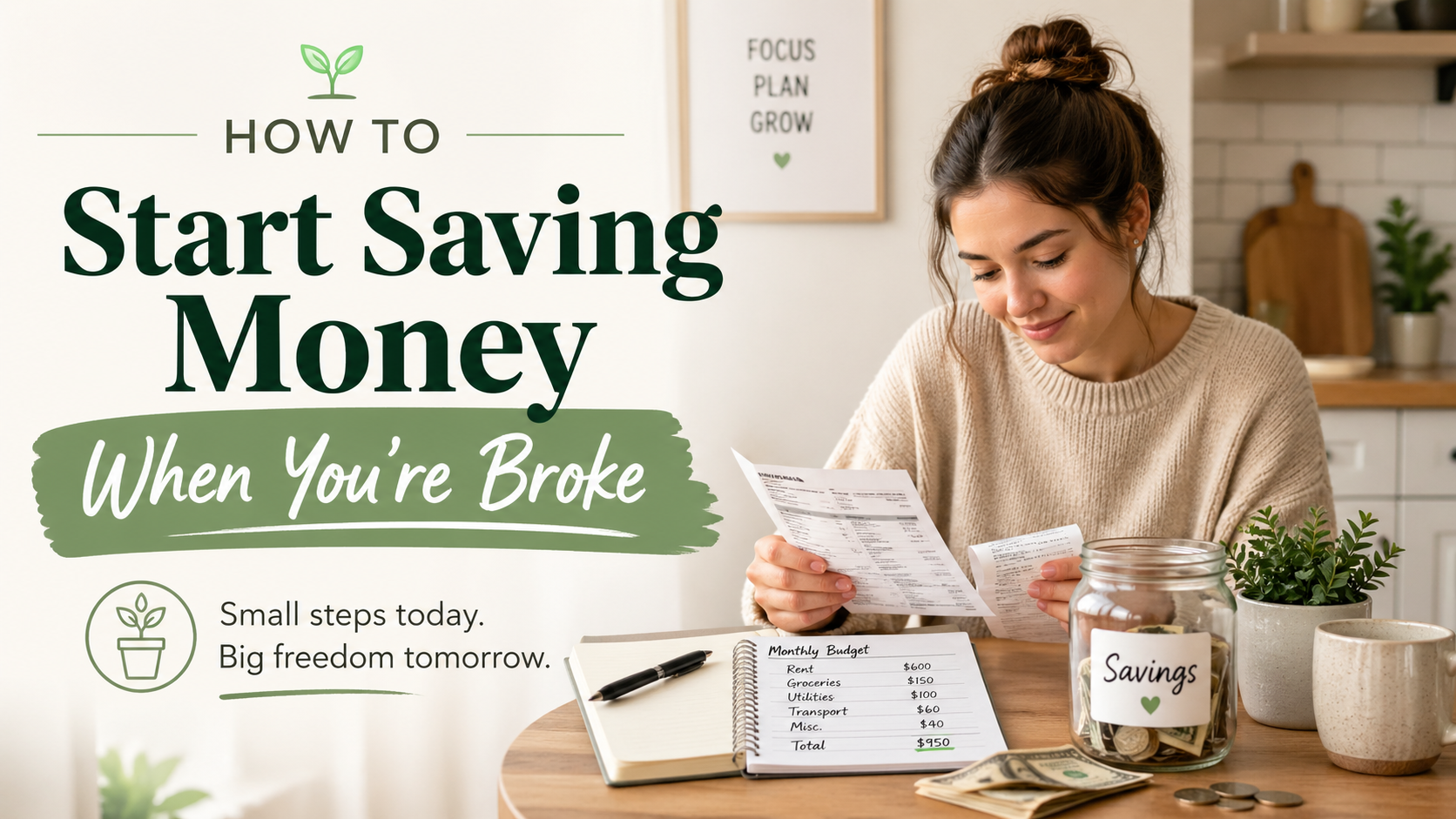
I’m currently building my emergency fund before investing more, because I want a stronger financial foundation before taking bigger risks with my money. Investing is still important to me, but I’m learning that having a safety net first can make the whole journey feel calmer and more sustainable.
Why I’m Pausing Before Investing More
I want to invest more and move faster toward financial freedom, but I’m learning that investing without a safety net can create unnecessary stress.
I’m focusing more on building an emergency fund right now, so if something goes wrong, I have something to rely on.
What an Emergency Fund Actually Is
An emergency fund is money set aside for unexpected expenses, like car repairs, medical bills, job loss, or anything that could otherwise push you into debt.
It’s a way to stay in control and feel safe. Even in the midst of a storm.
Why I Think It Matters Before Investing More
If you just start immediately investing and ignoring your emergency fund, you can end up in unnecessary stress. For example your investment might have gone temporarily down, and then an emergency comes and you have to sell everything with a loss.
But if you had an emergency fund, you could have waited with selling your investment until it had risen again so you could earn profit instead of losing.
Sometimes it can also be hard to access your money if you have invested it. For example, in a fund, it usually takes between 2-6 business days until you receive the money.
And that’s not practical if you have an emergency that needs to be fixed today.
My Current Emergency Fund Goal
My first goal is not to build a perfect emergency fund overnight. My first goal is to create a small safety net that makes me feel more stable.
I have split my current emergency fund goal in 3 parts:
Level 1: A small starter emergency fund:
- 10 000 NOK
Level 2: One month of expenses
- 20 000 NOK
Level 3: Three to six months of expenses
- 100 000 NOK
This is where I want to be, especially before i start investing more aggressively.
How I’m Finding Money to Build It
Right now, what i do, is to make saving automatic. If you start small, and make it automatic, it’s much easier to stick to.
I have a setting in my bank for my debit card, which is that every time i use my card, 10% of the money i spend goes to another account, and from that account 450 NOK is spent investing in a chosen fund.
For example, if I buy groceries for 250 NOK, 25 NOK is sent from my debit card, to the separate account.
This way, I’m building my emergency fund, and i invest a small part every month to a fund at the same time. And the best part is that it happens without me noticing it happen.
Where I’m Keeping My Emergency Fund
I’m keeping my emergency fund in a separate account from the account I use in everyday life.
I want my emergency fund to be accessible, but not so accessible that I accidentally spend it.
I recommend to have it in a separate account that has high interest-rate, in that way you also earn a bit from the interests over time.
What Counts as a Real Emergency?
Don’t mix emergency with ”something I really want”.
It’s important to be disciplined when it comes to the emergency fund. Otherwise you will just use it unnecessarily, and the fund will never grow to be a real source of protection and safety.
Examples on emergencies:
- Urgent car repair
- Job loss
- Medical or family emergency
- Essential home repair
Examples on things that are not an emergency:
- New phone upgrade
- Random shopping
- Vacation
- Investing opportunity
How This Helps Me Stay Calm With Investing
With an emergency fund, I believe I’ll be able to invest with more patience. If the market goes down or life gets expensive, I won’t feel forced to sell.
It actually helps you with your investing, because if you have an emergency fund, you can take more risk. Taking more risk can potentially lead to higher returns, but I want to make sure I have a safety net first.
My Simple Plan Going Forward
My plan is simple: build my emergency fund step by step, keep it separate, and only invest more aggressively once I feel financially stable enough.
I’m investing slowly right now with very little risk, at the same time as I’m building my emergency fund. When my fund is big enough i will start investing more heavily and more risky.
Conclusion: Safety First, Then Growth
I still want to invest and grow my money, but I’m realizing that financial freedom is not only about chasing returns. It’s also about building peace of mind.
If you’re also trying to save more money, you might like my post about how to start saving money when you’re broke.
I also wrote about beginner investing and what I’m learning before I start, which connects well with why I’m building a safety net first.
You can also read more about my journey to financial freedom and why I started this blog in the first place.
Vanguard also explains that an emergency fund can help you handle unexpected expenses without relying on debt or selling investments at the wrong time.
What about you? Are you building an emergency fund, investing already, or trying to do both at the same time? Let me know in the comments — I’d love to hear where you are in your journey.